


Industrial Wastewater Treatment Systems for Water Reuse and Circular Water Management
Global industrial water management is undergoing a structural shift driven by water scarcity, stricter discharge regulations, and rising operational costs. According to the United Nations World Water Development Report, Industrial Wastewater generation continues to increase in parallel with urbanization and manufacturing expansion, while global water reuse rates remain relatively low, particularly in developing and rapidly industrializing regions (UNESCO WWDR).
At the same time, the World Bank highlights that over 80% of wastewater globally is still discharged without adequate treatment, representing both an environmental risk and a missed resource recovery opportunity. This has accelerated demand for advanced water sustainability solutions that enable circular water use, resource recovery, and long-term operational resilience.
Industrial Water Scarcity Drives Demand for Water Sustainability Solutions and Reuse Systems
Across global manufacturing sectors, water is no longer treated as an unlimited input. Industries in water-stressed regions are increasingly required to implement internal recycling systems to reduce freshwater dependence and improve compliance with tightening environmental regulations.
In this context, water sustainability solutionsare evolving from basic treatment systems into integrated resource recovery platforms. These systems are designed not only to meet Discharge Standards but also to enable reuse of treated effluent in cooling, cleaning, and auxiliary processes.
The shift is particularly visible in energy-intensive and resource-heavy industries such as metallurgy, construction materials, chemical processing, and food-related manufacturing, where water reuse directly impacts operating costs and ESG performance.
Inclined Plates Tank Technology for High-Efficiency Solid–Liquid Separation
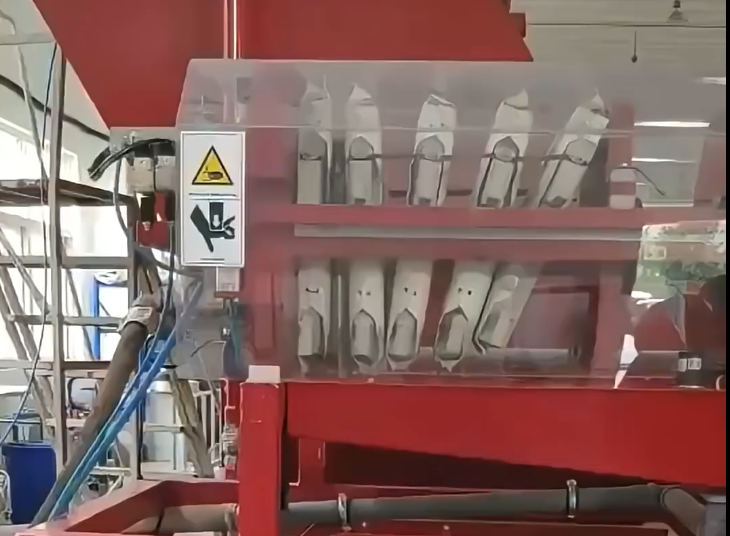
A key component in modern compact Wastewater Treatment Systems is theinclined plates tank, also known as lamella clarification technology. Based on shallow sedimentation principles, inclined plate modules significantly increase effective settling area without increasing tank footprint.
This design improves solid removal efficiency while reducing hydraulic retention time, making it suitable for facilities with limited land availability or high fluctuation in influent load.
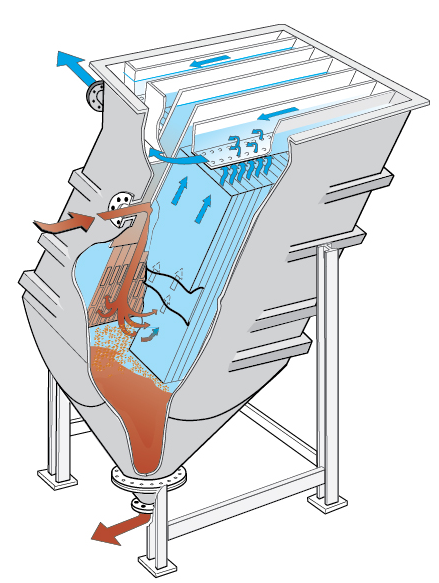
The use of inclined plate clarification is widely recognized in modern engineering practice as a cost-efficient alternative to conventional large sedimentation basins, especially in industrial retrofit projects.
Why Recyclability is Vital for a Sustainable Future in Industrial Water Systems
International water agencies and sustainability frameworks increasingly emphasize why recyclability is vital for a sustainable future, particularly in industrial water cycles.
Water recyclability reduces dependency on freshwater extraction, minimizes discharge volumes, and supports circular economy objectives. The International Energy Agency and UNEP both highlight that closed-loop water systems are becoming a critical part of industrial decarbonization strategies.
In practical industrial applications, recyclability enables:
- Internal reuse of treated wastewater
- Reduction of freshwater procurement costs
- Lower environmental discharge loads
- Improved ESG and regulatory compliance performance
These factors are driving industries to move beyond single-stage treatment toward integrated systems that combine clarification, filtration, and sludge reduction.

Filter Press Systems for Efficient Sludge Dewatering and Cost Reduction
After clarification, sludge generated from sedimentation is typically transferred to a high-pressure filter press system for mechanical dewatering. This stage is essential for reducing sludge volume and improving handling efficiency.
Compared with conventional dewatering methods, filter press technology provides higher dryness levels, reducing transportation and disposal costs while improving downstream handling stability.
Key benefits include:
- High solid content in filter cake
- Reduced sludge transport frequency
- Lower lifecycle operating cost
- Stable performance under variable wastewater conditions
The integration of clarification and filtration ensures a continuous and stable treatment process, even in industries with inconsistent wastewater characteristics.

Cost-Effective Water Solutions for Scalable Industrial Deployment
As industries face increasing pressure to optimize capital expenditure and operational efficiency, demand for cost-effective water solutions continues to grow.
Integrated systems combining inclined plate clarification and filter press dewatering offer significant advantages over traditional multi-tank wastewater treatment plants. These advantages include:
- Reduced civil construction requirements
- Compact modular system design
- Lower energy consumption
- Simplified operation and maintenance
This makes them particularly suitable for both new industrial installations and upgrades of existing wastewater treatment infrastructure.

Conclusion: Toward Circular Industrial Water Systems and Sustainable Resource Recovery
Global industrial water management is moving toward a circular model where wastewater is no longer treated as waste but as a recoverable resource stream. This transformation is driven by environmental regulations, water scarcity challenges, and rising operational costs.
Integrated wastewater treatment systems combining inclined plate clarification and advanced sludge dewatering technologies play a critical role in enabling this transition. By supporting efficient solid–liquid separation, water reuse, and sludge minimization, these systems provide a practical pathway toward scalable water sustainability solutions and long-term industrial resilience.